



Chiropractic kelowna
Here’s what nobody tells you about seeing a Chiropractor: you’re supposed to leave with more than just a quick adjustment. You should walk out knowing exactly what’s wrong, what you’re going to do about it, and how to keep it from happening again.
That’s what makes Pro Motion Clinic different from other options when you’re looking for a Chiropractor in Kelowna. We combine hands-on treatment with exercise rehab, patient education, and advanced tools like shockwave therapy. Because if you’re the type who bikes the Rail Trail on weekends or plays pickup hockey at MNP Place, you need more than temporary relief—you need to get back out there.
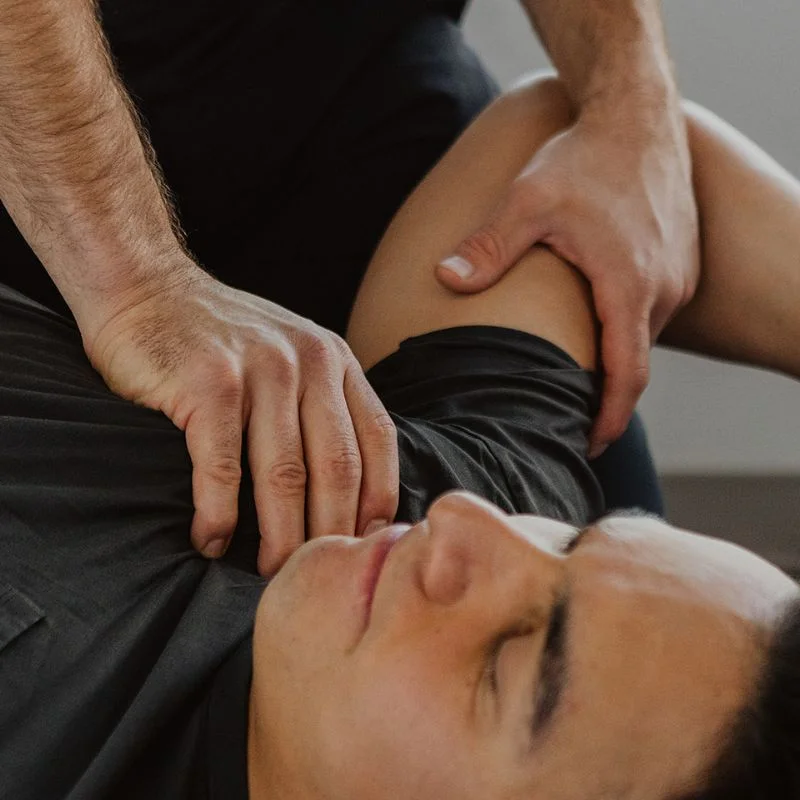
What Brings People to a Chiropractor?
Think about your last week. Did you wake up with a stiff neck that made shoulder checks impossible while driving down Highway 97? Maybe your lower back started protesting after an afternoon of yard work. Or perhaps that shoulder has been getting worse since you started training for the Okanagan Marathon.
These are the everyday issues that bring people through our doors at 3030 Pandosy Street. Not dramatic injuries (though we help with those too). Just the regular wear and tear that adds up when you’re trying to live an active life in Kelowna.
Here’s what we see most often:
- Back pain that makes getting out of bed feel like a workout
- Neck tension that turns into headaches by midday
- Shoulder problems that limit your golf swing or climbing reach
- Hip tightness that changes how you walk or run
- Knee issues that make the stairs at Okanagan Lake feel like Mount Everest
How We Help at Pro Motion Clinic
We start with an assessment. Not the five-minute kind where someone pokes around and then cracks your back. We’re talking about movement screens, checking how your body actually works when you move. Because here’s the thing—your pain might be showing up in one spot, but the real problem could be somewhere else entirely.
Then we build a plan. Adjustments when they help. Exercise rehab to fix the underlying issues. Education so you understand what’s happening. And tools like shockwave therapy when we need to speed things up.
We work with everyone from weekend warriors to athletes who compete at high levels. The approach stays the same: figure out what’s wrong, fix it properly, and teach you how to stay fixed.
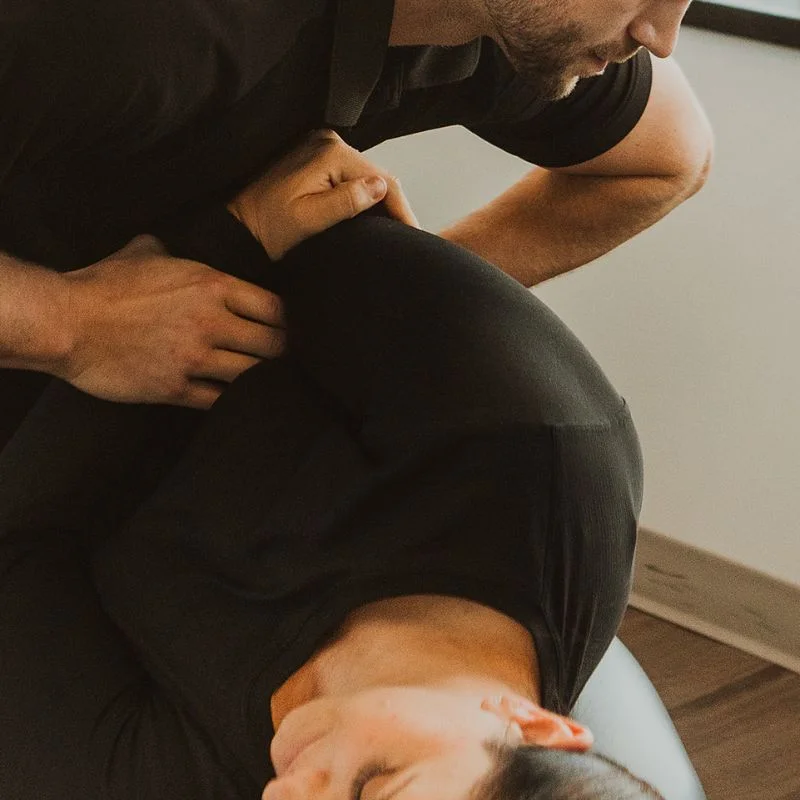
Shockwave Therapy: When Your Body Needs a Boost
This treatment uses sound waves to kickstart healing in tissues that have gotten stuck. We’re talking about tendons that won’t quit hurting, muscles that stay tight no matter how much you stretch, or old injuries that flare up every time you try to get back to training.
The sound waves create controlled stress in the tissue. Your body responds by increasing blood flow, breaking down scar tissue, and ramping up the healing process. You might feel sore for a day or two after treatment, but most people notice improvement within a few sessions.
We use shockwave therapy for things like tennis elbow, plantar fasciitis, rotator cuff issues, and stubborn muscle knots. It’s especially helpful when you’ve tried rest, ice, and basic treatment but nothing’s changing. Our Chiropractors who work with a lot of athletes use this tool to get people back to performance faster than traditional methods alone.
Active Release Therapy: Movement-Based Soft Tissue Treatment
Active Release Therapy (ART) is a patented soft tissue technique that addresses problems in muscles, tendons, ligaments, fascia, and nerves. When tissues become overused—through repetitive motions, acute injuries, or chronic tension—your body produces scar tissue that binds structures together. This creates restrictions that limit movement and cause pain.
Here’s what makes ART different: you’re an active participant. Our Chiropractor identifies the problem tissue through hands-on examination, then applies precise tension while you move the affected area through specific patterns. As you actively lengthen the muscle or move the joint, we’re breaking up adhesions and freeing tissue that’s stuck together.
The treatment combines examination and therapy in every session. We assess texture, tightness, and movement of the soft tissues, then use over 500 specific movement protocols to target your exact problem. You might feel a “good hurt” during treatment—it’s often intense—but most people notice immediate improvement in their range of motion.
ART works well for runners with IT band issues, cyclists with tight hip flexors, climbers with forearm tension, and desk workers dealing with carpal tunnel symptoms. These conditions all share a common root: overused tissues that have developed restrictions. By restoring normal texture and movement to these tissues, we can resolve pain that often hasn’t responded to other treatments.
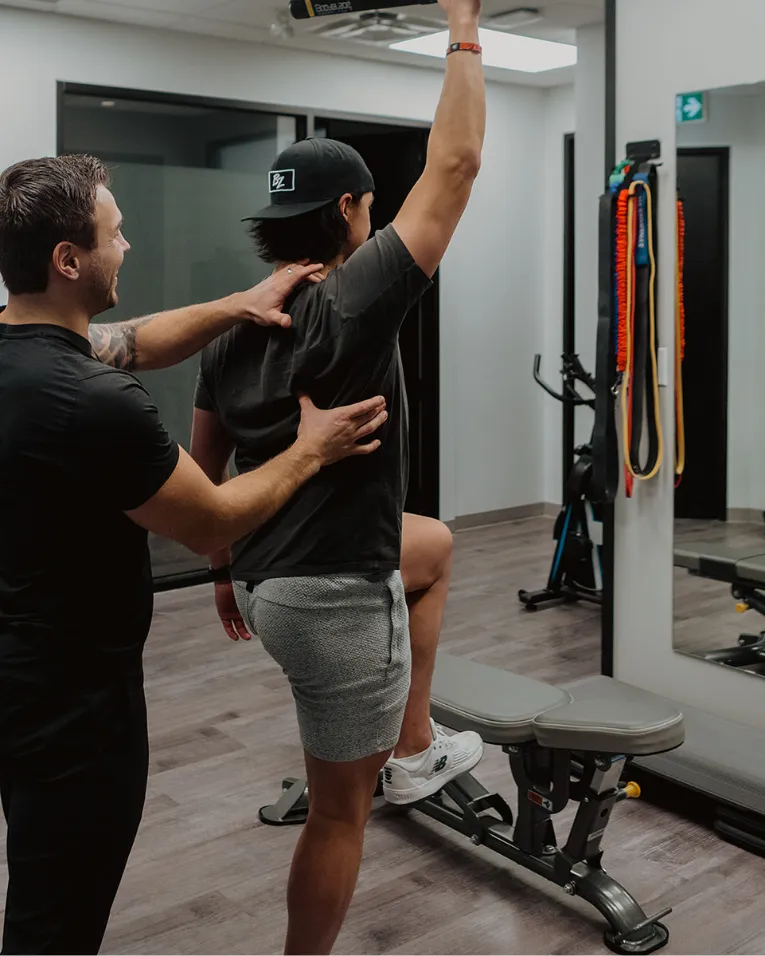
Movement Screens: Finding What You Can’t See
That’s what movement screens are for. We watch how your body moves through basic patterns—squatting, lunging, reaching overhead. We’re looking for compensations, asymmetries, and weak links that might be causing your symptoms.
Most people are surprised by what we find. Your knee pain might come from weak glutes. Your shoulder issue might start at your mid-back. Your headaches might be related to how you stabilize your core.
Once we see how you move, we can address the real problem instead of just chasing symptoms. This is where the exercise rehab comes in. We give you specific movements to retrain the patterns that aren’t working right.
For the active Kelowna crowd—the people hiking Knox Mountain trails or skiing Big White—understanding your movement patterns is the difference between managing an issue and actually solving it.
Concussion Testing and Management
Concussions don’t always mean you got knocked out cold. Sometimes it’s a hard fall while mountain biking. Sometimes it’s taking an elbow during a game at MNP Place. Sometimes it’s a car accident that rattled your brain more than you realized at the time.
What matters is how you manage it afterward. Rest is part of recovery, but so is gradually reintroducing activity at the right pace. That’s where proper concussion management comes in.
We use baseline testing and symptom tracking to guide your recovery. This helps us know when it’s safe to return to work, driving, exercise, and sport. Push too hard too fast, and you risk making symptoms worse or prolonging recovery. Take it too easy for too long, and you might delay your return unnecessarily.
The goal is a systematic approach that respects your brain’s healing process while getting you back to normal life safely. For parents with kids in hockey, lacrosse, or other contact sports, having a Chiropractor who understands concussion protocols can be the difference between a smooth recovery and ongoing problems.
TPI Assessments: Golf-Specific Care
Golf looks easy until you try to swing a club well. Then you realize you’re asking your body to rotate, transfer power, maintain stability, and time everything perfectly—all while standing on one leg at the end of your swing.
The Titleist Performance Institute (TPI) assessment is designed specifically for golfers. Our TPI-trained Chiropractors check mobility, stability, and strength patterns that directly affect your golf swing. Can you rotate your thoracic spine? How’s your hip mobility? Are you stable enough to generate power without losing your posture?
Here’s what makes this useful: instead of telling you to “keep your head down” or “rotate more,” we identify the physical limitations that might be preventing good mechanics. Then we fix those limitations with targeted exercises and manual therapy.
We work with golfers at all levels, from people who just enjoy nine holes at Sunset Ranch to competitive players training at Okanagan Golf Club. Our Chiropractors who understand golf biomechanics know that improving your physical capabilities often fixes your swing better than another lesson at the driving range.
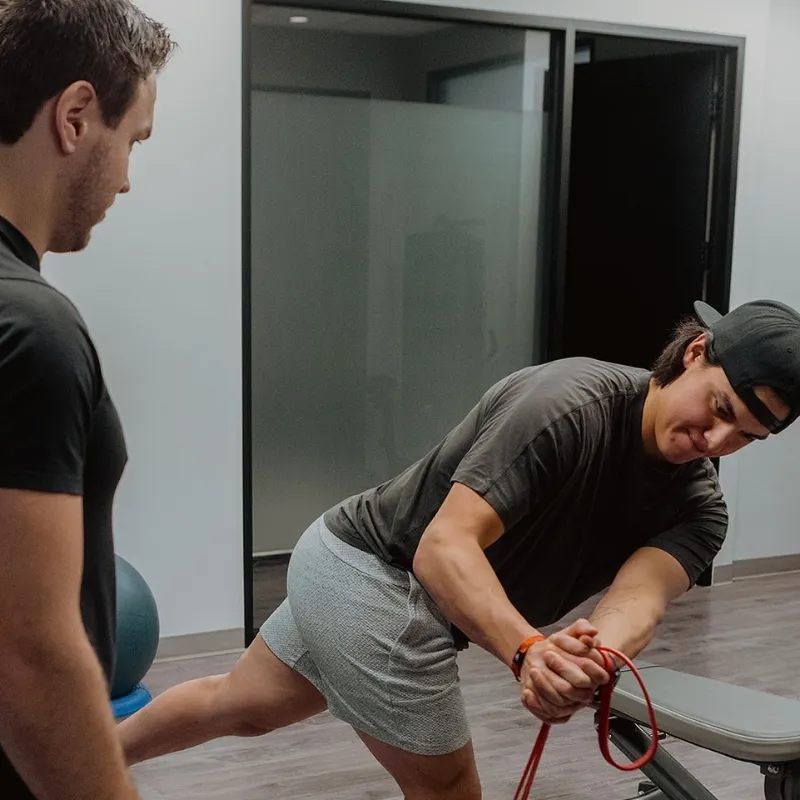
Myofascial Release Therapy: More Than Just Massage
Your fascia is the web-like tissue that wraps around every muscle, organ, and structure in your body. When it’s healthy, it’s flexible and allows smooth movement. When it’s not, it can create restrictions that pull on areas far from the original problem.
Myofascial release therapy addresses these restrictions. It’s different from regular massage. Instead of working the muscle, we’re working the fascia—applying sustained pressure to areas of restriction and waiting for the tissue to release.
It’s slow work. We might hold pressure on one spot for several minutes. But when fascia releases, the change can be dramatic. Range of motion improves. Pain patterns shift. Areas that felt “locked” suddenly move freely.
We often combine myofascial release with other treatments. After an adjustment, it helps the body hold the change. Before exercise rehab, it can free up movement patterns that were restricted. For people dealing with chronic tension or old injuries that changed how they move, this therapy addresses layers that other treatments might miss.
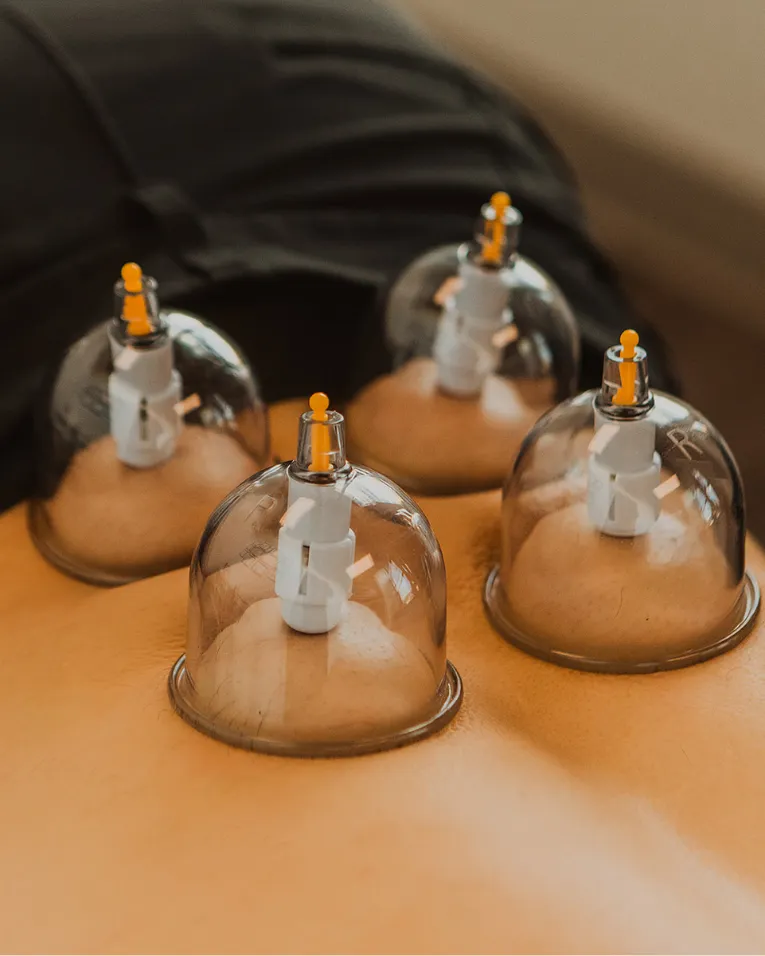
Cupping: Ancient Technique, Modern Results
Those circular marks you’ve seen on Olympic athletes? That’s cupping. And no, it’s not just for people competing at the highest level.
Cupping works by creating suction on your skin using plastic or glass cups. The negative pressure pulls blood to the area, separates tissue layers that have stuck together, and helps flush out built-up waste products from your muscles.
We use cupping when muscles are locked up tight or when tissue feels dense and restricted. It’s particularly good for upper back tension (the kind you get from sitting at a desk all day), tight IT bands, or stubborn knots that won’t respond to other treatment.
The marks it leaves behind look dramatic, but they don’t hurt. They’re basically the opposite of a bruise—instead of impact causing blood to pool, the suction is drawing blood to the surface. They fade within a few days to a week.
Some people feel immediate relief. Others notice the difference a day or two later when their movement feels easier and pain has decreased. Either way, cupping is another tool we use when your body needs help breaking free from restrictions that are holding you back.
Taping: Therapeutic Support Between Visits
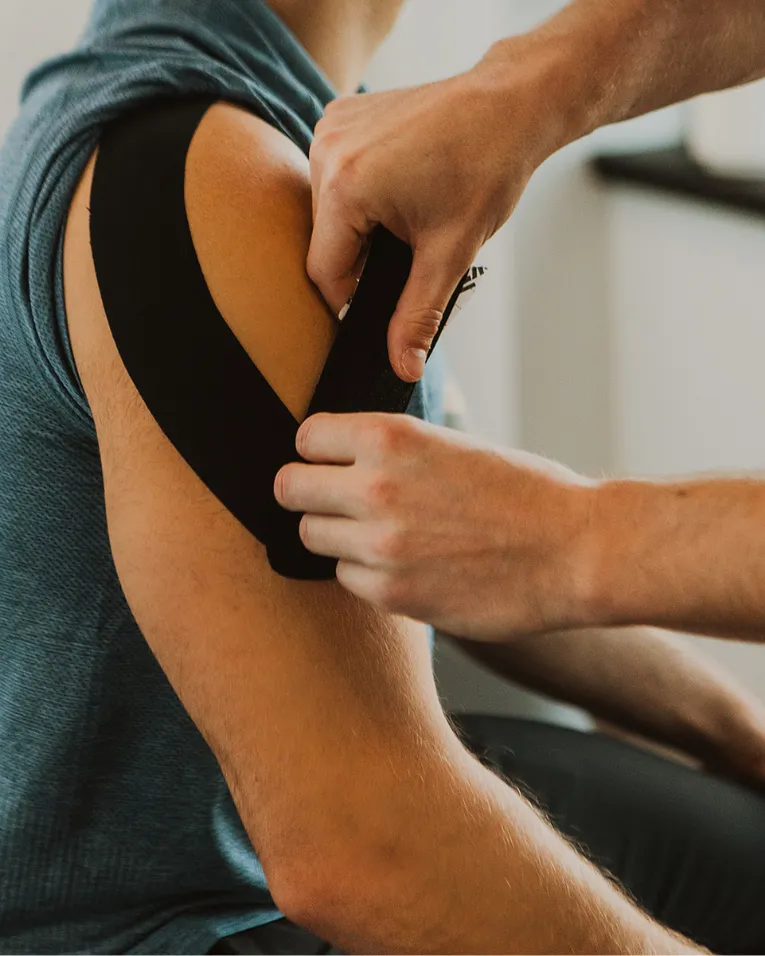
Therapeutic taping extends the benefits of your treatment beyond our clinic. We use different taping techniques depending on what your body needs.
Kinesiology tape is the stretchy, colorful tape you’ve probably seen on athletes. It’s designed to support muscles and joints without restricting movement. The tape gently lifts your skin, which may help reduce swelling and improve circulation to the area. We use it for conditions like shoulder instability, knee tracking problems, postural support, or to help fatigued muscles during activity.
Athletic tape provides more rigid support. When you need real stability—like protecting an ankle that’s healing or limiting motion in a joint that needs to stay in a specific position—this is the tape we reach for. It’s designed to restrict movement in the directions that could cause re-injury while still allowing you to stay active.
The application matters as much as the tape itself. We’ll position it to support proper movement patterns, reduce strain on healing tissues, or provide feedback to help you move correctly. You might wear it for a few days or just during specific activities, depending on your needs.
Here’s what makes taping useful: you can head out for a trail run at Myra Canyon, play a round at Gallagher’s Canyon, or work a full day while the tape keeps supporting the treatment work we’ve done. It’s like taking part of your therapy session with you.
Instrument-Assisted Soft Tissue Mobilization: Precision Tool Work
Sometimes hands alone aren’t enough to get into problem tissue. That’s where instruments come in.
IASTM uses specially designed metal tools to detect and treat areas where tissue has become restricted. We glide the instrument along your muscles and fascia, and it catches on spots where things aren’t moving right—adhesions, scar tissue, areas where layers have stuck together.
Once we find those spots, we use the tool to work them. The edge of the instrument lets us get more specific than we could with just our hands. We can target exactly where the problem is and apply the right amount of pressure to break up restrictions.
It’s not the most comfortable treatment you’ll ever have. The areas we’re working are usually already sensitive. But most people find it’s a tolerable discomfort, and they feel better movement right after. You might be a bit sore for a day or two as your body processes the work we did.
We often use IASTM for chronic tightness, old injuries that never quite healed right, or when traditional soft tissue work isn’t making enough progress. Runners with persistent calf issues, desk workers with forearm tension, athletes with mobility restrictions—these are common situations where IASTM helps us get results faster.
Therapeutic Ultrasound: Deep Tissue Healing
Surface treatments can’t always reach where the problem lives. When you have an injury deep in your muscle or tendon, heat packs warm your skin but don’t penetrate far enough to make a real difference.
Therapeutic ultrasound uses high-frequency sound waves to create deep tissue heating. We apply gel to your skin and move the ultrasound head slowly over the treatment area. The sound waves travel several centimeters below the surface, warming muscles, tendons, ligaments, and joints that other treatments can’t effectively reach.
This deep heating serves multiple purposes. It increases blood flow to the area, bringing fresh oxygen and nutrients while flushing out waste products. It helps break down scar tissue and adhesions that limit mobility. It can reduce pain signals and help tight muscles relax. For chronic tendon problems, deep muscle strains, or joint conditions where stiffness is limiting your healing, ultrasound provides a way to stimulate recovery at the tissue level.
We typically use ultrasound as part of a complete treatment approach. We might apply it before manual therapy to warm and prepare tight tissue for hands-on work. Or we use it after an adjustment to help the surrounding soft tissue settle and adapt. It’s rarely a standalone treatment, but it often makes everything else we do more effective.
Treatment sessions are brief—usually five to ten minutes on each area. You’ll feel gentle, comfortable warmth. If you experience any sharp pain or burning sensation, let us know immediately so we can adjust. The goal is therapeutic heat that promotes healing, not discomfort.
Vestibular Therapy: When Your Balance System Needs Help
That spinning sensation when you roll over in bed. The dizziness that hits when you look up quickly. The unsteady feeling that makes you grab for support when you stand.
These aren’t just annoying—they’re signs your vestibular system might not be working right. Your vestibular system includes your inner ear and the parts of your brain that process balance information. When something goes wrong, it can make simple movements feel disorienting or even frightening.
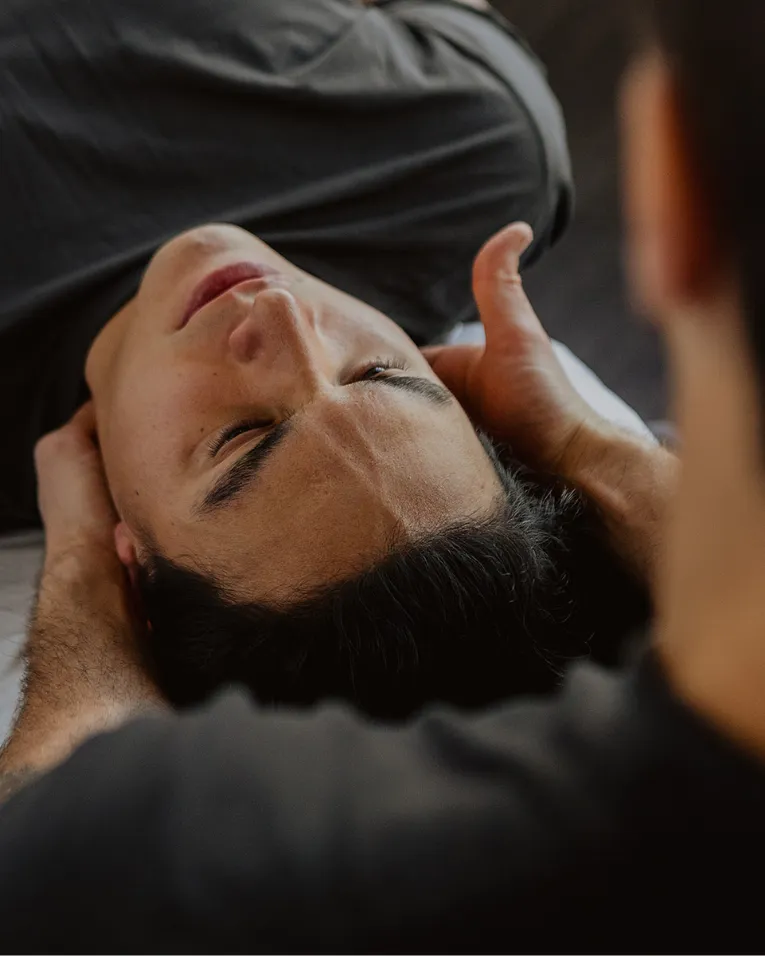
The most common cause is Benign Paroxysmal Positional Vertigo (BPPV)—tiny calcium crystals in your inner ear get displaced and send confusing signals to your brain. Our Chiropractors can perform specific maneuvers to guide these crystals back where they belong, often providing immediate relief.
But vestibular issues can also come from neck problems, head injuries, or nervous system dysfunction. That’s why we start with a thorough assessment. We check your eye movements, test your balance, and evaluate how your neck and spine might be contributing to your symptoms.
The Vestibular Treatment might include repositioning maneuvers for BPPV, cervical spine adjustments to improve nerve function and blood flow, and specific exercises to help your brain compensate and recalibrate. For many people dealing with vertigo or dizziness, this approach provides relief when other treatments haven’t helped.
Veterans Affairs Medical Assessments
Pro Motion Clinic proudly supports Canadian Veterans by providing medical assessments for Veterans Affairs Canada (VAC) Disability Benefit applications. Our Chiropractors are recognized by VAC as qualified health professionals who can complete Medical Questionnaires and assessments for musculoskeletal and joint-related conditions.
If Veterans Affairs has asked you to have a Medical Questionnaire completed, you can book directly with us—no referral needed. Chiropractors are now authorized to complete these assessments for conditions within our scope of practice, which means you don’t need to see a medical doctor separately for many musculoskeletal issues.
We offer direct billing through Medavie Blue Cross to reduce out-of-pocket expenses and make the process as smooth as possible. When you come for your assessment, bring any relevant medical records, previous treatment notes, or documentation related to your condition. This helps us complete your form thoroughly and efficiently.
Whether you’re applying for benefits or continuing your treatment plan with VAC, our team understands the documentation requirements and provides the detailed evaluations needed to support your claim. We’re here to help you get the care and benefits you’ve earned through your service.
Why Location Matters When Choosing a Chiropractor in Kelowna
But location is about more than just geography. We’re in Kelowna because we understand the lifestyle here. This is a place where people ski, bike, hike, paddle, golf, and generally refuse to let injuries slow them down for long.
That shapes how we practice. We don’t just want you pain-free. We want you back on the mountain, back on the trails, back on the course. That requires a different approach than simply managing symptoms.
What to Expect at Your First Visit
When you walk in, we sit down and talk. What’s bothering you? How long has it been going on? What makes it better or worse? What do you want to be able to do that you can’t do right now?
Next comes assessment. We watch you move. We test your range of motion. We check your strength and stability. We’re gathering information to understand not just what hurts, but why it hurts.
Then we explain what we found. No jargon, no confusion—just clear information about what’s happening in your body and what we can do about it.
Treatment starts on that first visit when appropriate. Maybe you get an adjustment. Maybe we do some soft tissue work. Maybe we start you on a few key exercises. The goal is always to move you forward, not just book another appointment.
The Real Goal of Chiropractic Care
Here’s the truth: we’re not trying to see you forever. Good chiropractic care should make you more independent, not more dependent.
That means teaching you what’s wrong. Showing you exercises that address your specific issues. Building strength and mobility so problems don’t keep coming back. Using our hands-on skills to help when you need it, and sending you on your way when you don’t.
Some people need a few visits. Some need ongoing care because of their activity level or the nature of their condition. But you should always know where you stand, what progress looks like, and what the plan is.
That’s the Pro Motion difference. We’re your Chiropractor in Kelowna who treats you like an athlete, even if your sport is just keeping up with your kids at City Park.
Ready to Move Better?
Call us at (236) 420-0660 or book online at promotionclinic.com. We’re open Monday through Saturday, we support ICBC claims, and we offer direct billing to make things easier.
Whether you’re dealing with a new injury or an old problem that won’t quit, we’re here to help. Active people need active solutions. That’s what we do best.
Chiropractor Services
active release therapy
concussion testing management
cupping
Instrument-Assisted Soft Tissue Mobilization
Myofascial release therapy
movement screens
Shockwave Therapy
Taping
Therapeutic Ultrasound
TMJ Disorder Jaw Pain Treatment
TPI Assessments
Vestibular Therapy
Veterans Affairs medical questionnaire
Comprehensive medical assessments and documentation to support Veterans Affairs Canada applications and ongoing healthcare needs for veterans.